State Department Under the Knife? Potential Funding Cuts Loom
Proposed deep cuts to State Department funding have alarmed foreign policy experts who warn that diminished diplomatic capacity could weaken U.S. influence abroad and force greater reliance on costlier military interventions.

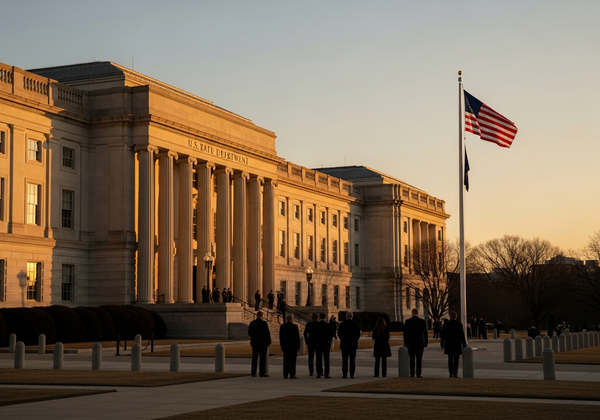
The Trump administration is reportedly considering significant funding cuts to the State Department, the primary agency responsible for conducting U.S. foreign policy and diplomacy. These potential cuts have raised concerns among foreign policy experts and international observers about the potential impact on America's ability to engage effectively on the global stage and address pressing international challenges.

The State Department plays a crucial role in a wide range of activities, including negotiating treaties, fostering international cooperation, providing aid and assistance, and representing U.S. interests abroad. Substantial budget reductions could potentially impair the department's capacity to carry out these essential functions, potentially leading to a diminished U.S. role in international affairs and a reduced ability to respond to global crises.
A weakened State Department could also necessitate a greater reliance on military solutions, which are often more costly in both human and financial terms.

Critics of the proposed cuts argue that they could undermine America's diplomatic influence and its ability to effectively address complex global issues such as terrorism, climate change, and humanitarian crises. A weakened State Department could also necessitate a greater reliance on military solutions, which are often more costly in both human and financial terms.
Conversely, proponents of the cuts may argue that they are necessary to reduce government spending and reallocate resources to other domestic priorities. They might also contend that a leaner State Department could operate more efficiently. However, the potential long-term consequences of significantly reducing funding for diplomacy and international engagement are a subject of considerable debate within the foreign policy community and beyond.
 Ava Washington
Written by
Read next

The Architecture of Compromise: How Bills Actually Become Laws
The journey from policy idea to enacted law is far messier than any civics textbook suggests, built on committee gatekeeping, back-channel negotiations, and the deliberate architecture of compromise.
Libel Lawsuit Revisited in NYC Court
A retrial in Manhattan federal court revisits a high-profile libel case that tests the boundaries of press freedom and the legal standard of "actual malice" in political commentary.
Harvard Under Scrutiny: Defiance and Potential Financial Fallout
Harvard University faces the prospect of significant financial consequences after reportedly defying the federal government, raising urgent questions about institutional autonomy and the limits of political pressure on academia.
The New Yorker's Political Stage: Podcasts and Local Power Plays
The New Yorker's "Political Scene" podcast and its reporting on the New York City Council speaker race illustrate the magazine's reach from national policy analysis to granular local politics.
The Architecture of Compromise: How Bills Actually Become Laws
The journey from policy idea to enacted law is far messier than any civics textbook suggests, built on committee gatekeeping, back-channel negotiations, and the deliberate architecture of compromise.
Arctic Ambitions: Why Northern Shipping Lanes Reshape Global Trade
Receding Arctic ice is opening shipping routes that were once impassable, triggering a quiet but intense competition among northern nations over trade, sovereignty, and environmental stewardship.